Being manly doesn't imply being sexist
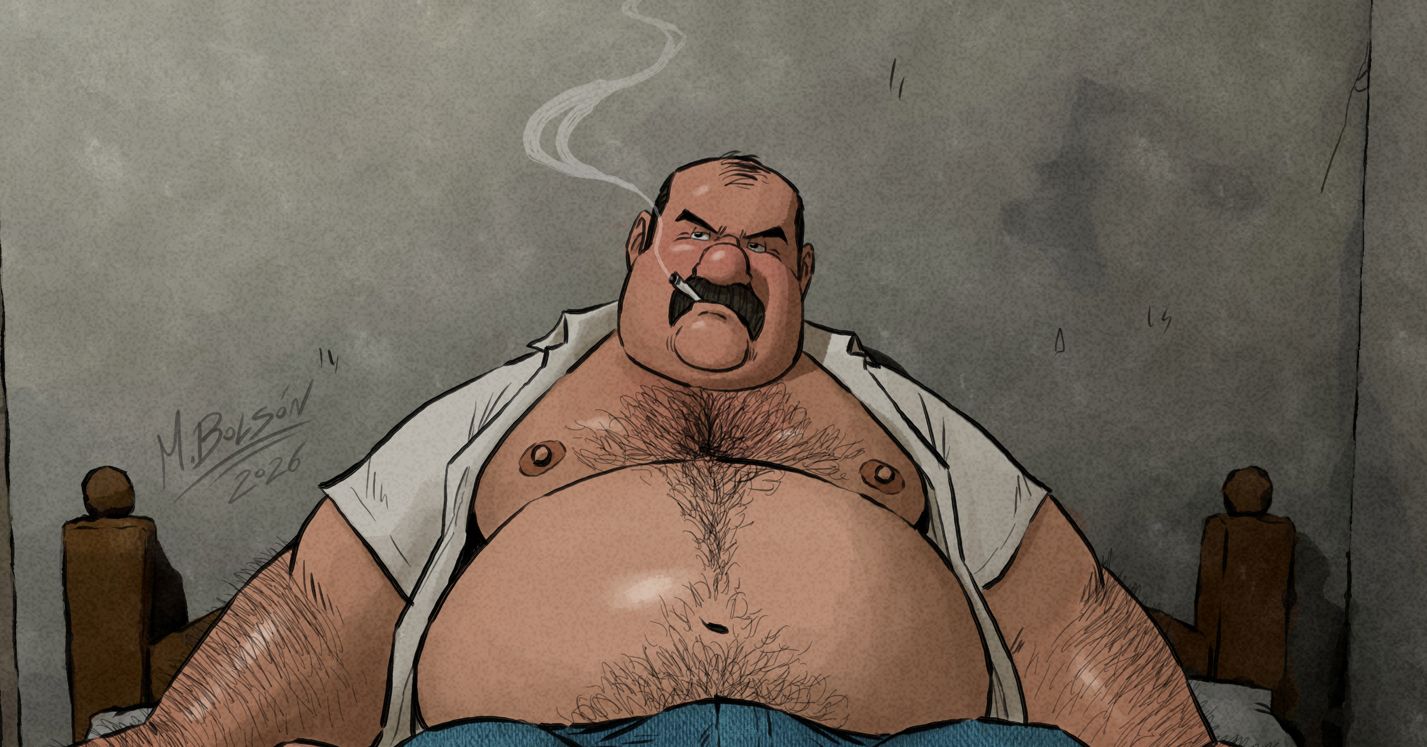
A while ago I told a friend that I've been drawing "bears": robust, mature men, trucker type. I told him what attracts me to them—their manly attitude, the sweat, the brute strength, that raw, macho scent.
"Ah, so you like macho men," he said.
"I didn't say anything macho," I replied.
"But those men are macho," he insisted.
That's when I suggested an exercise. I told him,
"Imagine a 50-year-old man coming home from a construction job. He's fat, burly. He's sweaty from working hard all day in the sun. He takes off his shoes and socks, unbuttons his shirt, grabs some beers from the fridge, sits down on the couch, and turns on the TV to watch a game, all while scratching his belly and sniffing his smelly armpit. He gets a little drunk and then falls asleep, snoring. All these characteristics and attitudes could be associated with a macho brute, a 'real' man.
When did I mention anything that would be offensive to a woman?"
My friend thought for a moment. "Good point," he said.
And that's exactly what I want to draw.
When I imagine my characters—fat, hairy, with that trucker look that at first glance screams "traditional straight macho"—I know I'm playing with a cultural expectation. We were taught to read that body, that roughness, that attitude, as an automatic synonym for a closed-minded attitude toward women or toward anything different. But a body doesn't think for itself. Brute strength doesn't come with an ideology. Sweat isn't sexist. Scratching your belly in front of the TV isn't sexist.
That's why my characters are usually bisexual instead of straight: not because it "corrects" the classic macho, but because it shows something that culture rarely reveals—that you can have that strength, that look, that manly attitude, without it being accompanied by the contempt or superiority we usually associate with it. The man in this example could very well have a feminist mindset, without that taking away an ounce of his classic macho image. Is it unlikely? Yes; because culturally this stereotype has been accompanied by a sexist context. Is one a product of the other? I don't know. But I do know that they aren't necessarily linked.
Being manly doesn't imply being sexist. They are two different things that culture has conditioned us to see as one. And separating them, at least for me, is part of what I try to do every time I draw.